Timing
Tokyo sumo outside tournament months
Tokyo's grand sumo tournaments run in January, May and September. What that means for your dates, and where a year-round session on Sunamachi Ginza fits in.
Reserve a place by the ring ↗Quick answer
Tokyo's three grand sumo tournaments are held at the Ryōgoku Kokugikan in January, May and September, each over fifteen days. Outside those weeks there is no ranked sumo in the city. The Sunamachi session runs most days all year, with two former professionals, so it works in any month, and alongside a tournament if your dates allow.
The tournament calendar
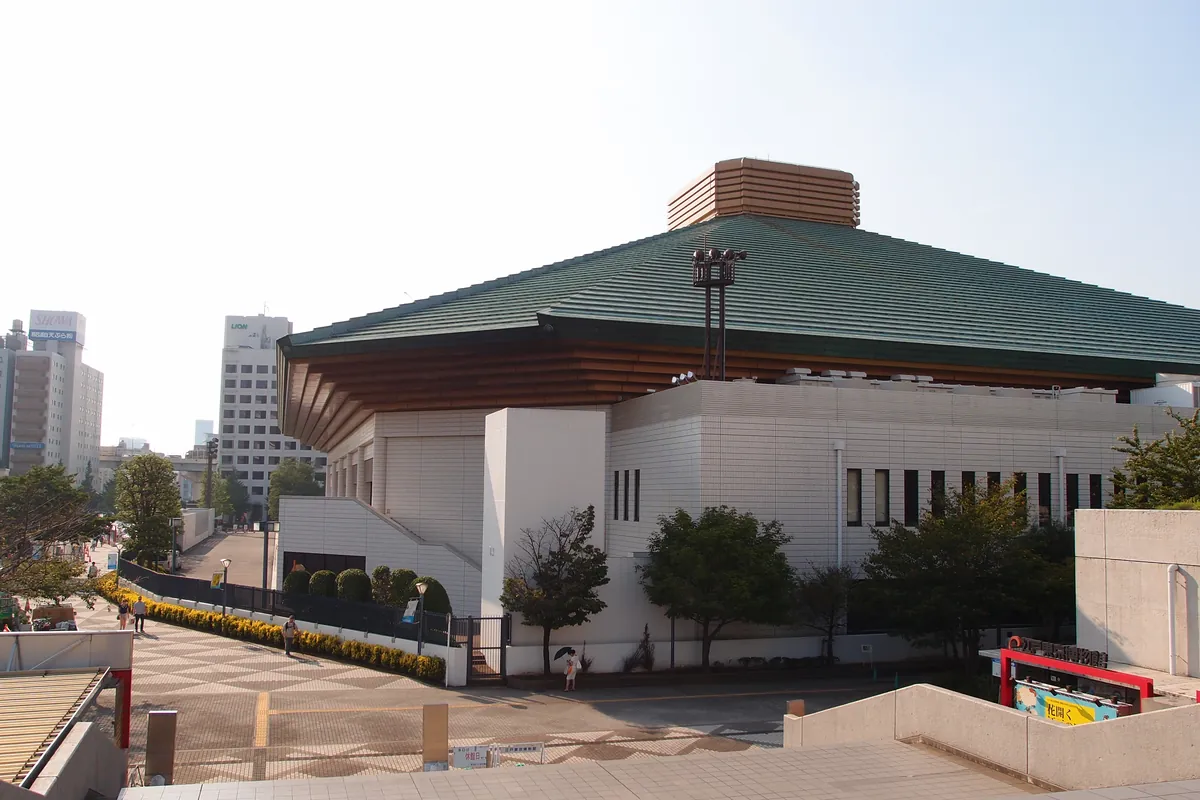
Professional sumo has run six grand tournaments, called honbasho, every year since 1958. Each lasts fifteen days, starting and ending on a Sunday roughly in the middle of the month. Tokyo stages three at the Ryōgoku Kokugikan, each January, May and September, and the rest go to Osaka (March), Nagoya (July) and Fukuoka (November). Only these tournaments count for promotion and relegation on the ranking sheet, so they are when the sport is at full strength. The Japan Sumo Association publishes each year's dates on its English site.
What a tournament day looks like
A tournament day is long. The junior divisions wrestle first, from the morning on, and the card climbs through the ranks, so the top wrestlers fight at the end of the afternoon, with the day closing at around six in the evening on the yokozuna's bouts. Wrestlers of the top two divisions also enter the ring together in embroidered ceremonial aprons, the keshō-mawashi. It is a remarkable thing to see, but it asks for most of a day.
The rest of the year
Between tournaments the wrestlers train in their stables and go out on regional tours, and there is no ranked sumo in Tokyo to watch. That is where a year-round session earns its place. On Sunamachi Ginza in Kōtō, two former professional wrestlers train and wrestle a few metres from you most days of the year, after an explanation in English and Japanese, and you can try the ring yourself. It is not a substitute for a tournament, but it shows the sport's movements and rituals up close in ninety minutes.
What the session shows that a tournament does not
A tournament seat puts you among thousands of spectators, with the ring raised on its clay platform some way off and bouts that are over in seconds. The Sunamachi session turns that round. The explanation comes first, so you know why the salt flies and what the referee's fan means; the two wrestlers train and fight a few metres from your seat with no barrier; and afterwards you can stand on the clay yourself. What it cannot give you is rank, stakes or the roar of a full hall.
If your trip falls in a tournament month
Then do both, in whichever order suits you. Some people prefer the Sunamachi session first, because the explanation of salt, the charge and the winning techniques makes a tournament day far easier to follow. Others go to the Kokugikan first and then want to stand on a ring themselves. The Kokugikan stands in Sumida ward, next to the Edo-Tokyo Museum.
Booking either
Tournament tickets are sold through the Japan Sumo Association, whose English site explains how to buy them and lists each year's tournament dates. The Sunamachi session books through GetYourGuide; it refunds in full if you pull out a day or more before, payment can wait until nearer the date, and the calendar lists each day's slots. Book the tournament first if your dates allow, then fit the session around it.
Frequently asked questions
When does Tokyo hold its grand sumo tournaments?
Three times a year at the Ryōgoku Kokugikan: in January, May and September, each running fifteen days.
Can I see sumo in Tokyo in other months?
Not ranked tournament sumo. A session such as the one on Sunamachi Ginza, with two former professionals, runs most days of the year.
Sources