Sumo on Sunamachi Ginza, with the ring challenge
About 90 minutes in Kōtō: an explanation in English and Japanese, training and bouts by two former professionals, and an optional turn on the ring in a mawashi. Children from four.
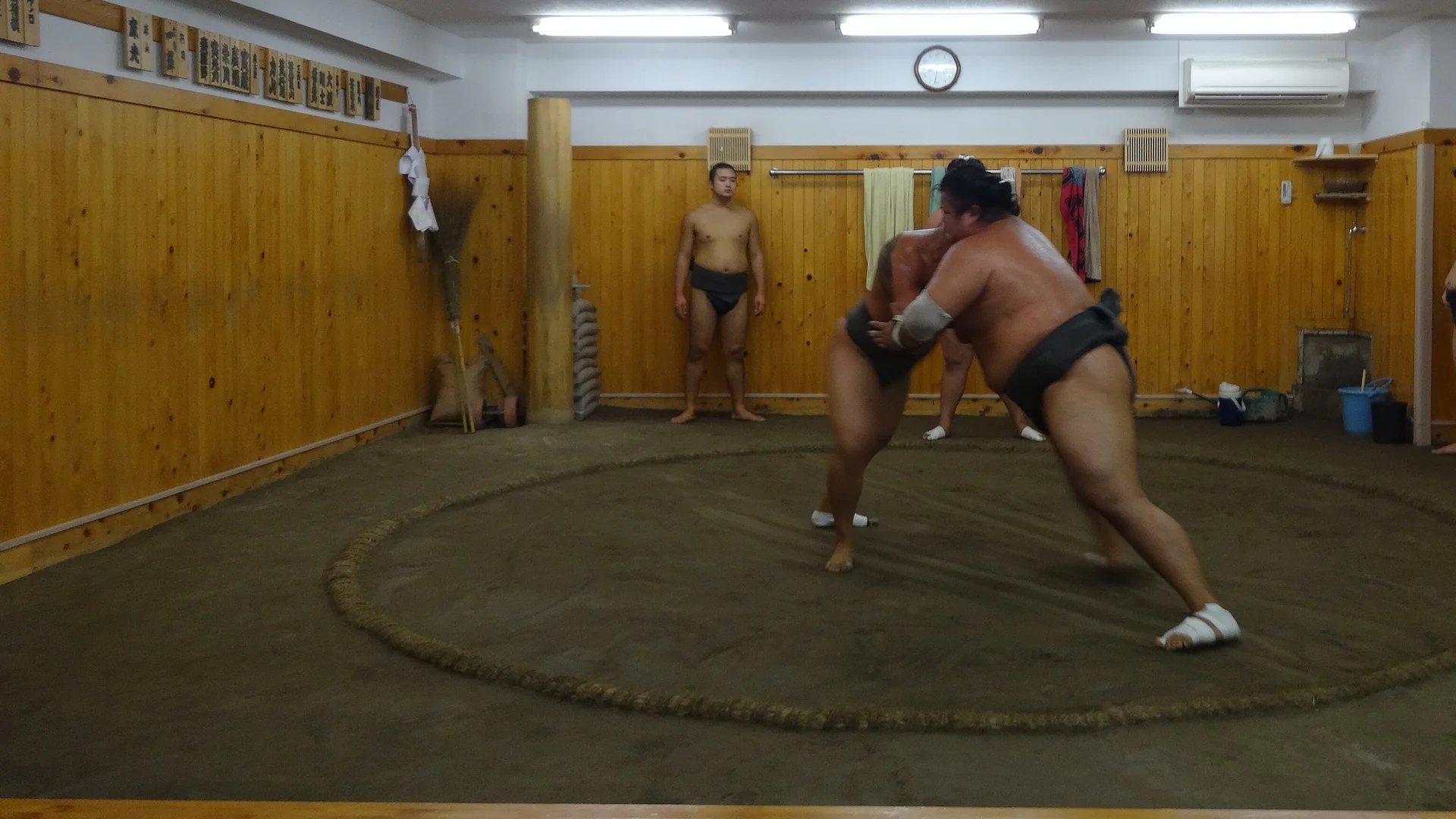
Sunamachi Ginza · Kōtō
On a shopping street in Kōtō, two former pros train and fight metres away, then invite you onto the dohyō.
Bring your dinner in from the street stalls; the ring is the only thing on the menu.
The answer, before the detail
In short
Yes, for most families and first-timers who want to see sumo up close, especially outside the tournament months. In about ninety minutes a host explains how the sport works, two former professional wrestlers train and fight a few metres from you, and then anyone who wants to, children from four included, can put on a mawashi and step onto the ring. You bring your own food from the stalls on Sunamachi Ginza, and getting there from the trains takes a proper walk.
A demonstration and hands-on session in a small room on a working shopping street in Kōtō ward, east Tokyo. The host speaks English and Japanese. The ring challenge in the last half hour is optional, and everyone can step onto the ring for photos at the end. Sessions run most days of the year; the booking calendar shows each start time.
It is not a tournament: Tokyo's grand tournaments are held at the Ryōgoku Kokugikan in January, May and September, with ranked wrestlers and a full day of bouts. It is not a dinner show either, because no meal is served; you buy food on the street beforehand and carry it in. And it is not a stage production with seat tiers to choose between.
From street stalls to the clay
The booking calendar shows each start time. Inside, the session follows the venue's own outline in three parts of about half an hour each.
Before
No meal is served, so come early, walk Sunamachi Ginza and buy whatever you like from its shops and stalls. You carry it in and eat by the ring.
Part one
A host covers sumo's history, its rituals, why the salt is thrown and how a bout is won, in English and Japanese.
Part two
Two retired professional wrestlers go through their training, then wrestle real bouts a few metres from your seat, with no stage or barrier between you.
Part three
Volunteers change into a mawashi in a private area and step barefoot onto the ring to take on a wrestler. Children from four and women can take part; watching instead is fine.
After
Everyone can step onto the ring for photos with the wrestlers and ask about their training and daily life.
Rituals of the ring
The host walks you through sumo's customs, and the order of the afternoon is the venue's own, so none of it is promised here. These are the rituals of professional sumo as English Wikipedia describes them, so each gesture makes sense when the wrestlers step up.
Dohyō
The ring measures 4.55 metres from edge to edge, its line drawn by bales of rice straw half buried in the clay. In professional tournaments it rises on a square clay platform; in a training room it lies flat on the floor but is otherwise the same. Two short white lines in the middle show where the wrestlers settle before the charge.
Shiko
A wrestler raises one leg as high and straight as he can, then drives the foot down hard, and repeats on the other side. In training the move is drilled hundreds of times in a row; before a bout it is performed as a ritual to drive away demons.
Shiomaki
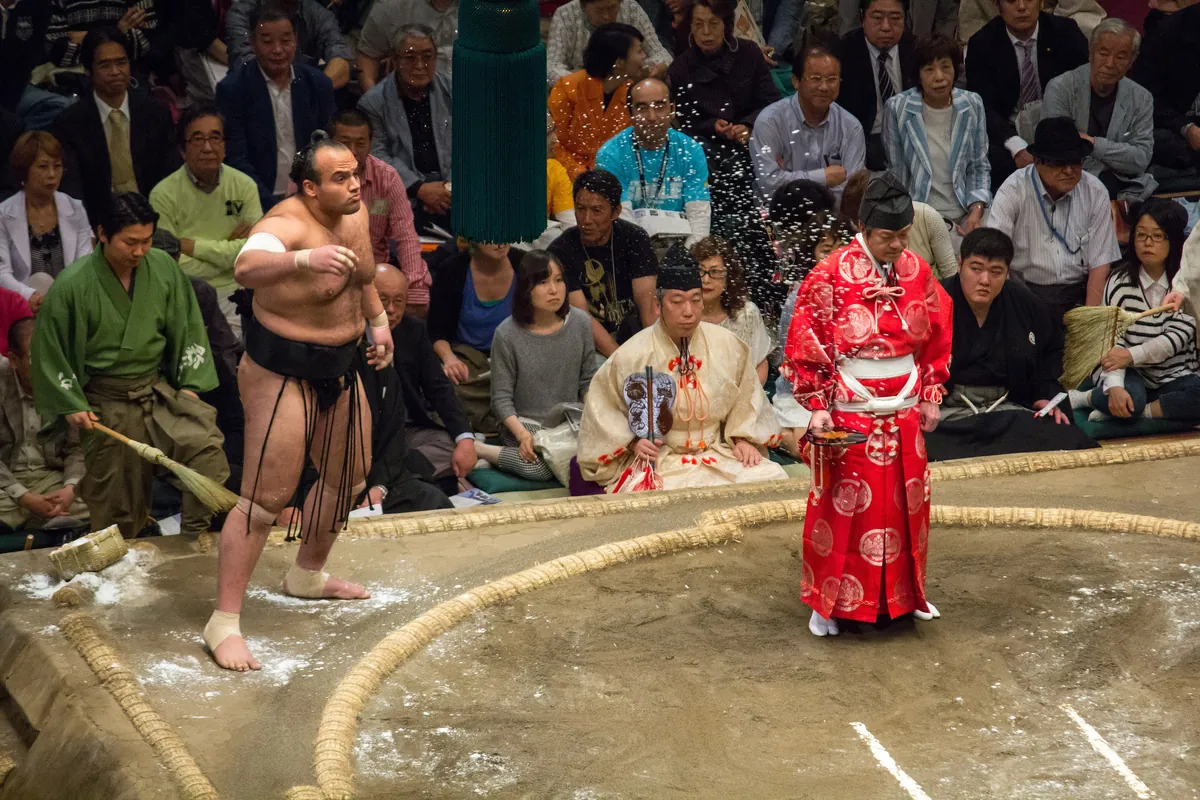
Before facing off, each wrestler scatters a fistful of salt across the clay. Salt purifies in Shinto belief, so the throw cleanses the dohyō and may also be meant to ward off injury. A typical handful is around 200 grams; some wrestlers throw much more.
Chirichōzu
Squatting face to face, the two wrestlers show their open palms, clap and stretch their arms out wide. The gesture shows that neither is carrying a weapon and that the fight will be clean.
Shikiri
Then comes shikiri, the preparation before the charge: the wrestlers crouch, glare at each other, rise, fetch more salt and crouch again, each hunting for a psychological edge. Top-division wrestlers are allowed four minutes for it.
Tachi-ai
The word joins the Japanese for standing and meeting. Both wrestlers must touch the clay with both fists and spring up together; if the start is not simultaneous, the referee can send them back to try again. Most bouts then last only a few seconds.
Gunbai
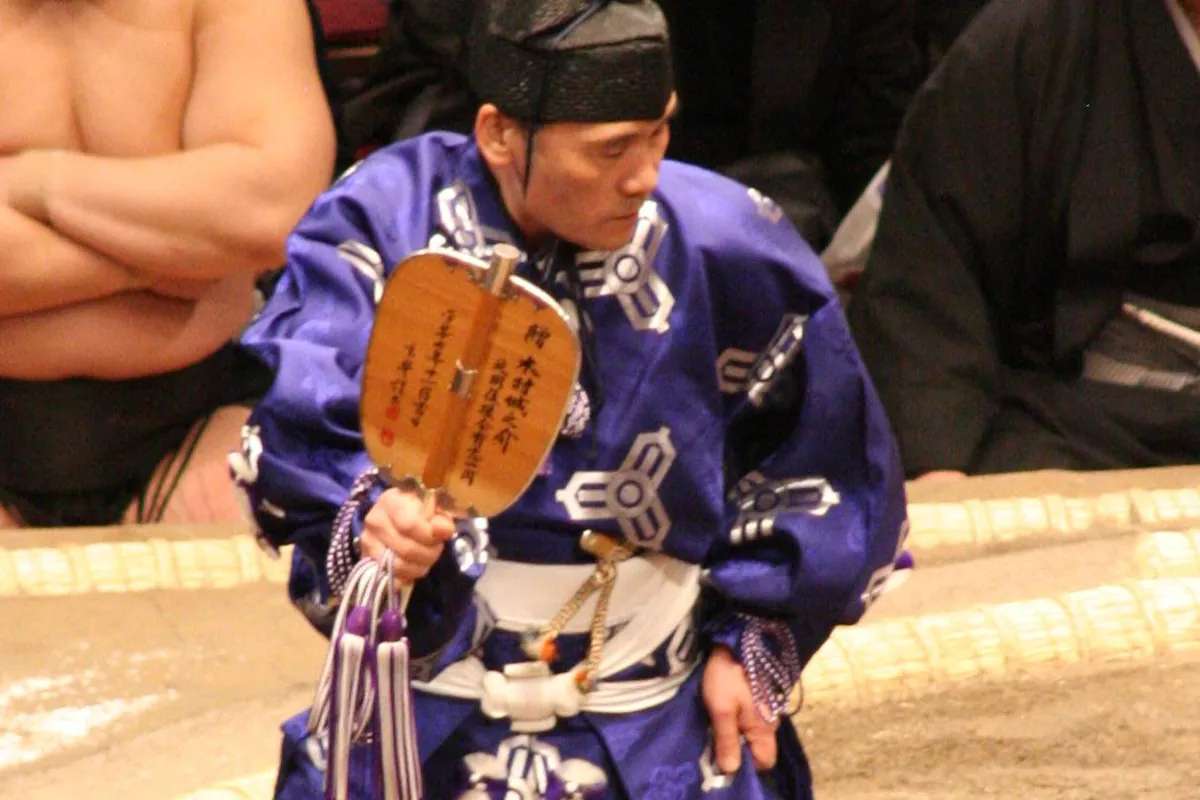
The gyōji, the referee in court-style robes and a black lacquered hat, carries a wooden war fan called a gunbai. He brings it in flat to signal that the bout must begin and, when it ends, points it at the winner's side. Five judges seated around the ring can question his call.
Kimarite
You win by forcing your opponent out of the ring or making him touch the clay with anything but the soles of his feet. The winning technique, the kimarite, is announced afterwards. The Japan Sumo Association recognises 82 of them; the frontal force-out called yorikiri is the most common.
Drawn from English Wikipedia's articles on sumo, the dohyō, the gyōji, the tachi-ai and kimarite, and its glossary of sumo terms, read in November 2026. A demonstration may show some of these and leave others out.
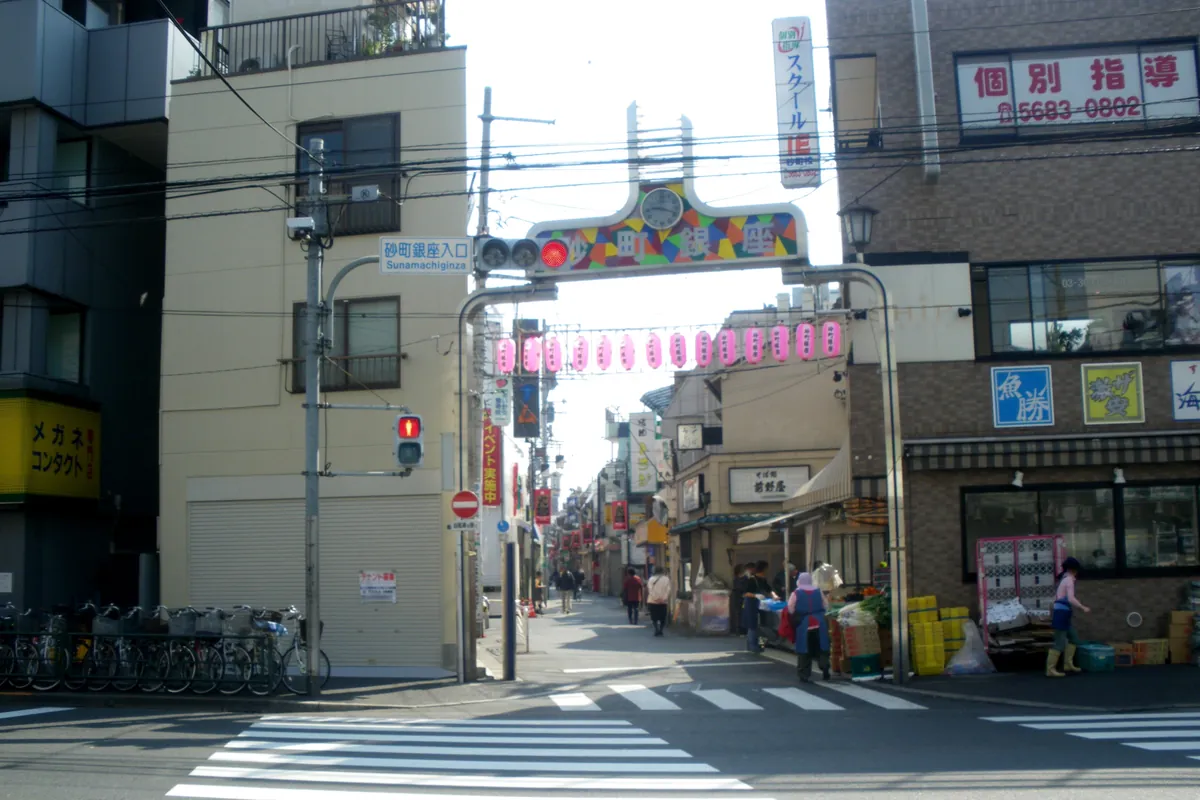
What your place covers
The terms in plain words, so nothing catches you out at the door.
Two ways to meet local Tokyo
Street, ring and ritual
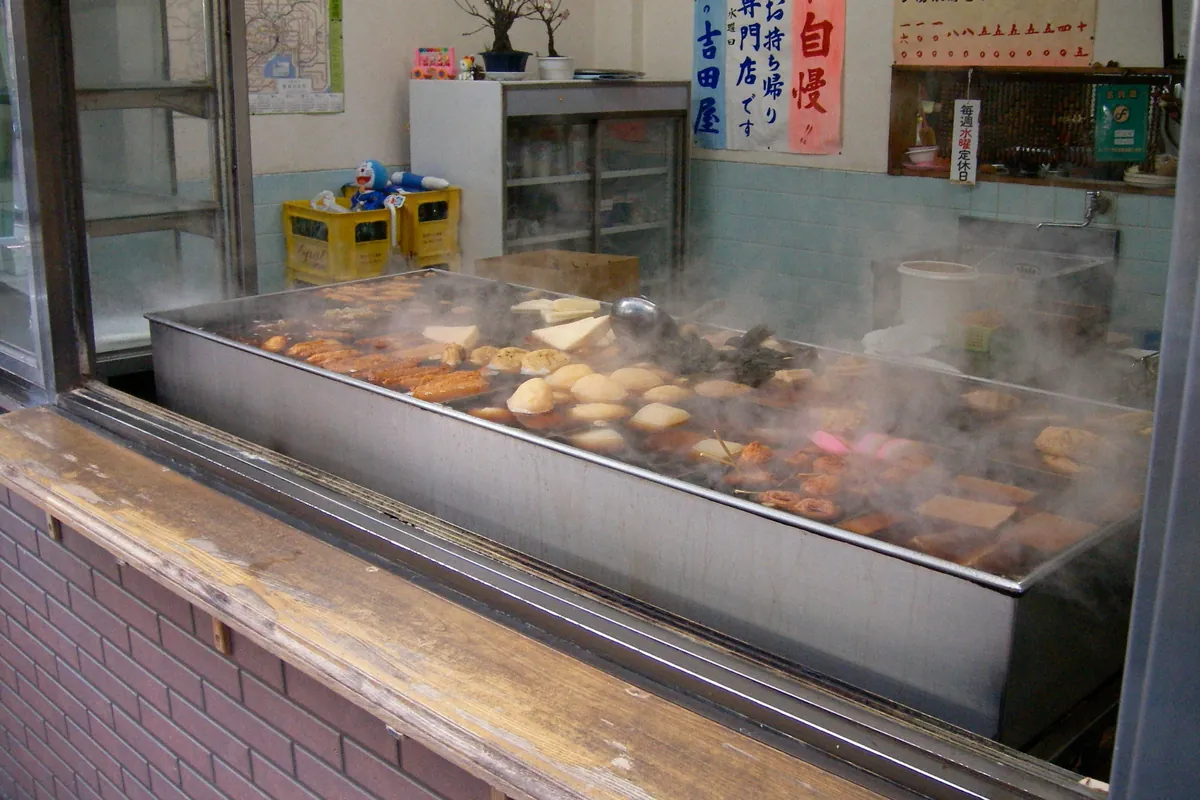
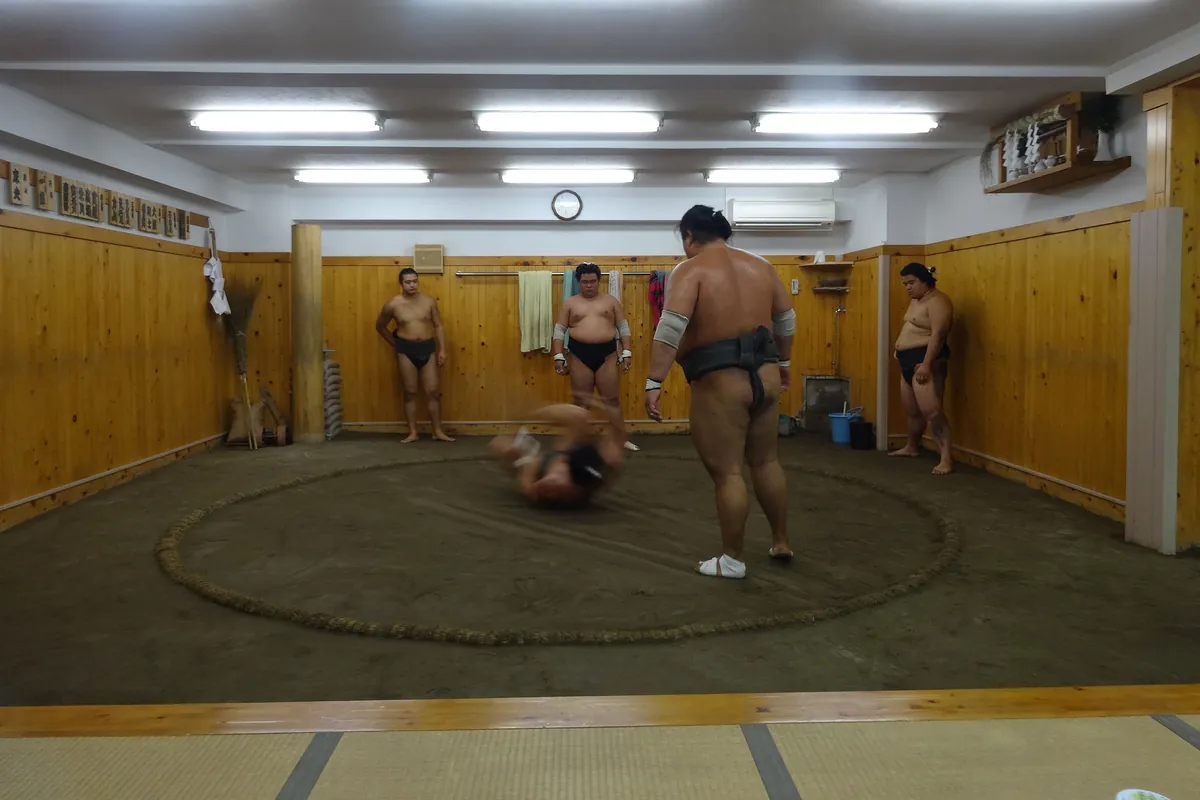
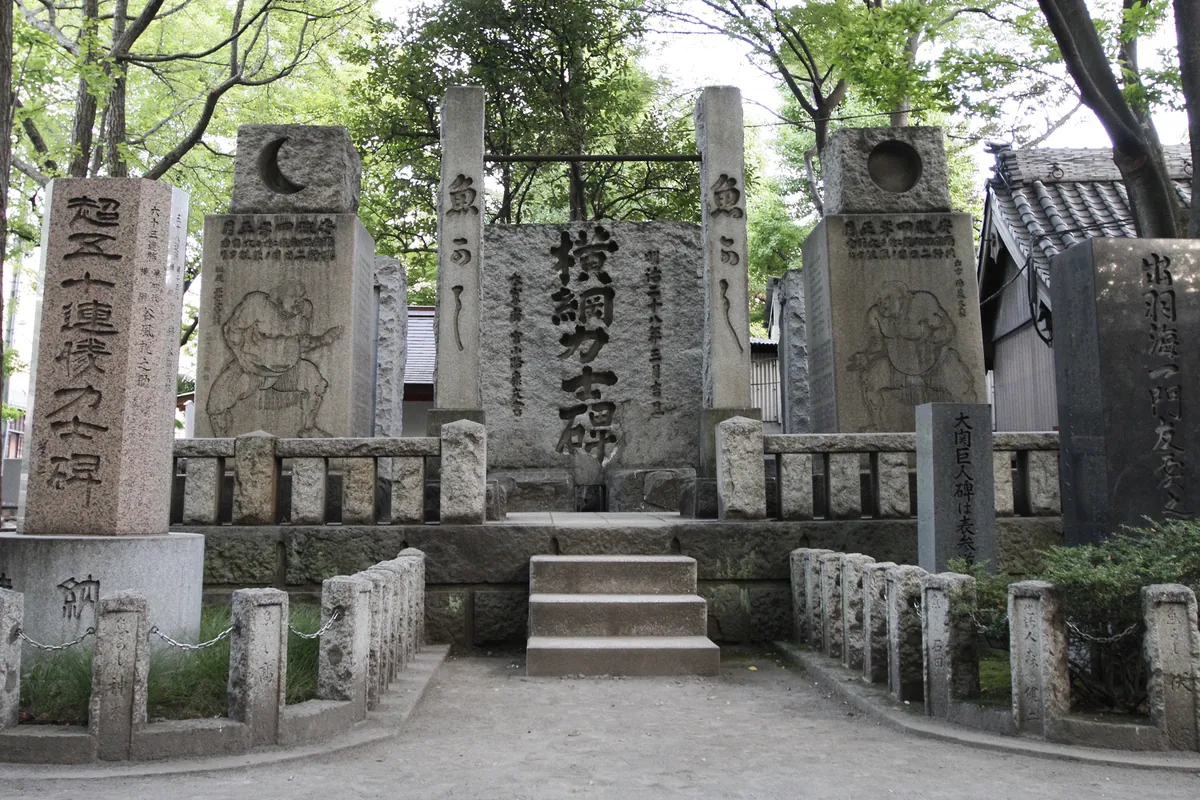
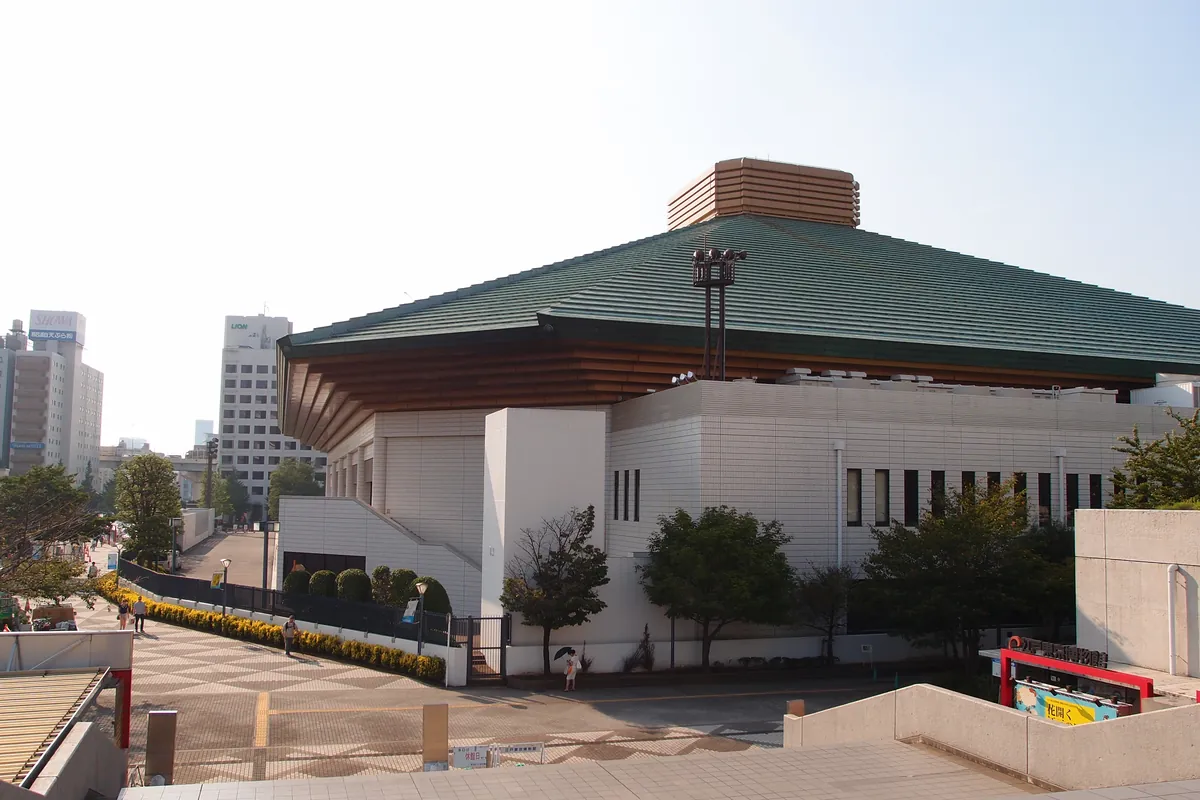
The gate of Sunamachi Ginza and an oden counter on the street, practice in a Tokyo stable, salt and the referee at a tournament, the yokozuna stones in Fukagawa and the hall where Tokyo's tournaments are held.
Book the ring, then plan the rest of Tokyo
The sumo session comes first. The second card is the Shinjuku bar crawl weighed against it in the comparison guide; the last two fill a day in Shinjuku or Asakusa.
About 90 minutes in Kōtō: an explanation in English and Japanese, training and bouts by two former professionals, and an optional turn on the ring in a mawashi. Children from four.
About three hours with a local guide through Omoide Yokocho, Kabukichō and Golden Gai, ending at a karaoke bar. Food and drinks paid as you go; not for under-20s.
About three hours in a small group, tasting dishes at a food stall, an izakaya, a traditional eatery and a gastropub, with two drinks included.
About two hours with a guide through Kaminarimon, Nakamise and Sensō-ji, Tokyo's oldest temple. Wheelchair accessible.
More to book around Tokyo
Out to Kōtō, ready for the ring
Take the Tokyo Metro Tōzai line to Minami-Sunamachi Station or the Toei Shinjuku line to Nishi-Ōjima Station. Neither station is on the street, so allow for a proper walk; your booking confirmation carries the meeting point.
City buses stop on the shopping street itself at Kitasuna 2-chōme. A taxi from either station is quick, though the lanes around the street are narrow.
Sessions run most days of the year. Pick a start time in the booking calendar and arrive early enough to buy food on the street first.
No meal is served. Buy what you like on Sunamachi Ginza and bring it in, drinks included.
Children from four can join in, ring challenge included; under-fours are free. Let them watch the wrestlers first and decide about the challenge on the day.
The venue is wheelchair accessible. Wear comfortable shoes for the street and bring a camera for the photos in the ring.
Read up before the ring
FAQ
For most families and first-timers who want to see sumo up close, yes. In about ninety minutes you get a clear explanation of the sport, two former professionals training and wrestling a few metres away, and the chance to step onto the ring yourself. It is a demonstration in a small room, not a tournament or a dinner show.
Yes. Children aged four and over can take part, ring challenge included, and under-fours go free. Three short parts keep the pace up, and the challenge is optional, so a child can simply watch and then pose in the ring for photos.
Yes. Here women and girls can step onto the dohyō and take part in the challenge. Professional sumo does not allow women into the ring, a rule rooted in Shinto and Buddhist ideas of purity.
No. There is no set meal. Arrive early, buy what you like from the shops and stalls on Sunamachi Ginza and bring it in to eat by the ring. Drinks are your own as well.
No. The ring challenge in the last half hour is optional. You can watch from your seat, and everyone can step onto the ring afterwards for photos with the wrestlers.
Take the Tōzai line to Minami-Sunamachi Station or the Toei Shinjuku line to Nishi-Ōjima Station and walk; neither is on the street, so allow time. Buses stop on the street at Kitasuna 2-chōme, and a taxi from either station is quick.
No. Tokyo's grand tournaments are held at the Ryōgoku Kokugikan in January, May and September. This session runs most days of the year and shows training and bouts by two former professional wrestlers in a small venue.
The host speaks English and Japanese and explains sumo's history, rituals and rules as the session goes.
Wheelchair users can get in and take part as spectators. A taxi from Minami-Sunamachi or Nishi-Ōjima is the easiest way in, as the lanes around the street are narrow.
GetYourGuide refunds the full amount when you cancel at least 24 hours ahead of your slot. You may also hold places now and pay nearer the date.
An independent writer, not the venue. Sunamachi Sumo Guide has no tie to the Sunamachi ring, its wrestlers or any sumo association. Places are booked on GetYourGuide, which handles payment and sends the confirmation.